
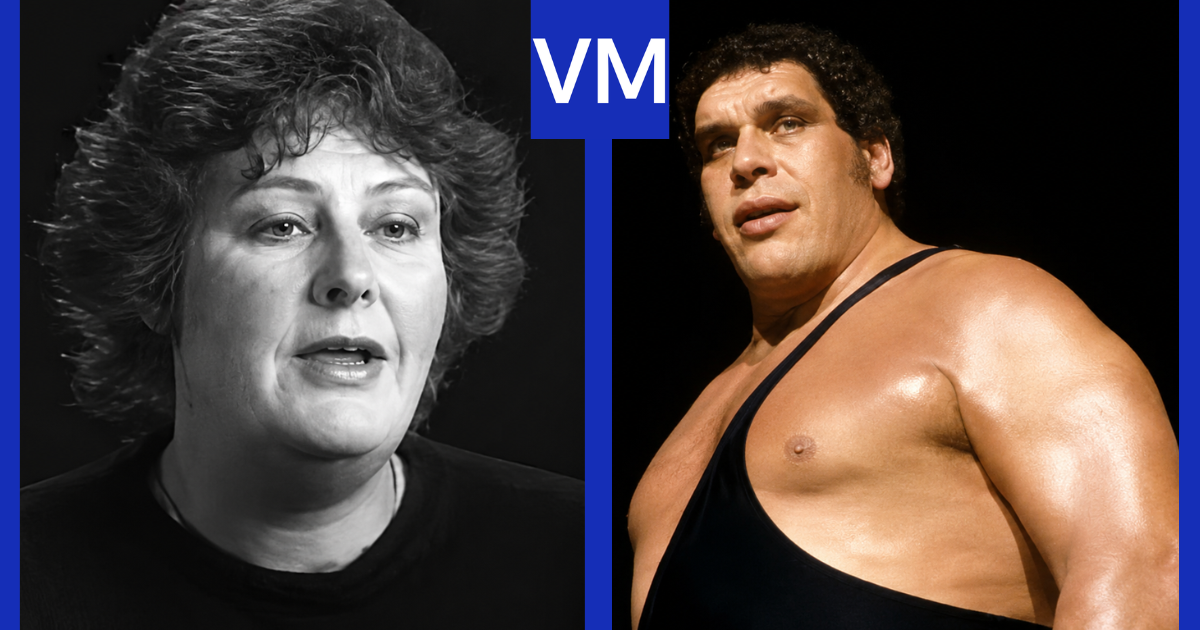
Jean Christensen stood among the small number of women involved in professional wrestling management during the 1970s and early 1980s. Born in Minnesota in 1949, she built a career in modeling and wrestling public relations that would ultimately lead her to André the Giant. Above all, Jean Christensen became widely known as the mother of Robin Christensen-Roussimoff, André the Giant’s only biological daughter. Their relationship, marked by love and complexity, unfolded away from the spotlight that followed wrestling’s most celebrated giant.
Jean Christensen’s Early Life and Background
Born in Minnesota with Danish Heritage
August 15, 1949, marked the birth of Jean Christensen in Minnesota, where the American Midwest’s steady rhythms would shape her formative years. Her family surname was Gantriis, a name that carried the weight of Danish heritage across generations. Her parents, Nels Peter Gantriis and Paula Gantriis, raised her in a household where Danish traditions remained visible in daily life. The cultural background emphasized discipline, fairness, and responsibility, values that Danish-American families often carried forward from their immigrant roots.
The modest Midwestern environment provided Jean with stability during her childhood. Minnesota’s close-knit communities fostered independence and practical thinking, qualities that would serve her well in adulthood. Her upbringing produced someone who worked steadily without needing recognition, a trait common among those raised in the American heartland. Family bonds remained strong throughout her youth, creating a foundation built on loyalty and mutual support.
Standing Tall: Jean Christensen Height and Early Confidence
Physical presence defined Jean Christensen from her teenage years forward. She grew to approximately 6 feet 4 inches tall (1.93 meters), a stature that placed her far above most women of her generation. Rather than viewing this exceptional height as a burden, she transformed it into a source of pride and confidence. The self-assurance she developed would later open doors in modeling and professional settings where commanding presence mattered.
Jean refused to let her height intimidate her or make her self-conscious. Instead of shrinking from attention, she carried herself with natural poise. That physical trait became an advantage, setting her apart in rooms filled with people who noticed her immediately. Her teenage years, when many young women struggled with insecurity, saw Jean developing the kind of confidence that couldn’t be taught. She learned early that standing out could work in her favor if she approached it with the right mindset.
Family Values That Shaped Her Character
The Gantriis household instilled principles that remained with Jean throughout her life. Honesty, hard work, and personal responsibility formed the core of her upbringing. Her parents emphasized supporting loved ones while maintaining a private life, approaching challenges with grace rather than drama. These lessons prepared her for complexities she couldn’t have anticipated in her Minnesota childhood.
Jean displayed a calm demeanor and intelligence from early on. She navigated social interactions gracefully, reading people and situations with skill. The ability to maintain discretion and personal integrity became hallmarks of her character. Her family taught her that ambition and humility could coexist, that success didn’t require broadcasting every achievement. Growing up surrounded by traditional values gave her a sense of balance, teaching her when to stand firm and when to adapt. The grounded foundation she received in Minnesota contrasted sharply with the world she would later enter, but those early lessons never left her.
From Modeling to Wrestling: Jean Christensen’s Professional Journey
Breaking into the Modeling Industry in the 1970s
The early 1970s brought Jean Christensen into the modeling world during a period when the fashion industry welcomed unique physical characteristics. Her height, placed between 5 feet 7 inches and 5 feet 10 inches by various sources, gave her a natural advantage in regional modeling circles. Fashion and commercial work expanded rapidly during those years, creating opportunities for models who stood apart from conventional standards.
Jean participated in photo shoots, fashion presentations, and promotional events across the Midwest. The work wasn’t international runway fame, but it provided practical experience in media environments. She learned how to communicate clearly with photographers, present herself professionally before cameras, and interact confidently with journalists and event organizers. These experiences proved valuable beyond the modeling industry itself.
The fashion world taught her skills that would serve her for decades: understanding public image, managing time efficiently, and reading different personalities. In other words, modeling became her training ground for professional communication and presentation, abilities that transcended the industry’s surface glamor.
Transition to Wrestling Public Relations
After several years in modeling, Jean Christensen made a career shift that surprised many observers. She joined the wrestling industry during the 1970s, stepping into public relations work with the World Wide Wrestling Federation (WWF). Professional wrestling was expanding beyond regional events into televised entertainment, and promotions needed media-savvy professionals who understood publicity.
Her modeling background made the transition natural. She already knew how public events functioned and how personalities needed presentation to audiences. The WWF was building toward its national moment during the early and mid-1970s, and the promotional machinery required people who understood media, public image, and journalist relations. Jean filled that role, bringing her communication expertise directly into wrestling’s growing infrastructure.
Working Behind the Scenes in a Male-Dominated Industry
Jean entered an environment where few women held professional management positions. She became one of very few women working at that level inside wrestling during that era. Men dominated professional wrestling both in front of and behind the cameras, making her presence unusual.
Working in that environment required specific abilities: discretion, organization, composure under pressure, and skill in managing unpredictable personalities. Jean possessed all of them. The role placed her in close contact with wrestling’s biggest names while requiring her to maintain professional boundaries during an era when kayfabe, the practice of presenting wrestling’s fictional realities as genuine, remained serious business among promoters.
Building Respect as a WWE PR Professional
As a wrestling publicist, Jean coordinated press coverage for events, managed wrestlers’ public appearances, and served as a buffer between talent and media. Her responsibilities included arranging promotional appearances, organizing interviews, and maintaining positive public perception for performers. The work demanded steady professionalism and the ability to handle high-pressure situations.
She built a reputation for reliability and calm handling of publicity demands. Colleagues respected her efficiency and discretion. Her understanding of image presentation helped wrestling reach broader audiences during a transformative period for the sport. The skills she developed in modeling, combined with her Midwestern work ethic, positioned her as a trusted figure within the wrestling organization. Her WWF career gave her access to what would eventually become the largest wrestling organization on the planet.
Jean Christensen and Andre the Giant: How Their Love Story Began
First Meeting Through Wrestling Events
Jean Christensen’s position in the WWF public relations department brought her into contact with André René Roussimoff around 1972 or 1973. Their paths crossed during wrestling events where she coordinated press coverage and he performed as the industry’s most recognizable attraction. The professional setting created natural opportunities for interaction, though romance wasn’t immediate.
Jean later described their first encounter in a television interview. “There was no spark there believe it or not it was like oh he was really surprised to be given something and not have somebody ask something and return it was just somebody I’d run into and you know eventually yes there was that nod nod winky winky thing going on you know and and it was really nice”. That detail revealed something significant about André’s daily experience. His entire adult life involved being treated as a spectacle, with people constantly staring, pointing, and demanding things from him. Someone who interacted with him as a person, not a phenomenon, stood out.
The Man Behind the Legend: Who Was André the Giant
André René Roussimoff was born on May 19, 1946, in Coulommiers, France, to Bulgarian and Polish immigrant parents. His gigantism became visible during childhood, a result of excess human growth hormone. By age 12 he stood 6 feet 3 inches. He left school at 14, worked on farms, and found professional wrestling through a Paris promoter who recognized the commercial potential of his size.
By 1971 André had relocated to North America. When Jean met him in the early 1970s, he was already one of the most recognizable attractions in professional wrestling. The 1974 Guinness Book of World Records mentioned him as the highest-paid wrestler in history up to that time, earning approximately USD 400,000.00 annually during the early 1970s. Dubbed “the Eighth Wonder of the World,” his career trajectory placed him at wrestling’s peak.
From Professional Connection to Personal Bond
Their relationship developed gradually beyond professional courtesy. Jean later said there was eventually “that nod nod winky winky thing going on” between them. The connection grew quietly, away from headlines. Working in the same industry meant shared schedules and regular contact, allowing familiarity to build naturally.
Jean handled aspects of André’s public life that few others understood. She coordinated his media appearances, managed press interactions, and served as a buffer during an era when maintaining wrestling’s fictional realities required serious discretion. That professional proximity gave her insight into who André was beyond his public persona.
Understanding Each Other Beyond the Spotlight
Despite popular belief and false online reports, Jean Christensen and André the Giant never married. Their relationship remained complex, shaped by distance, travel demands, and the pressures surrounding celebrity. No public marriage records exist confirming a legal union. However, Robin Christensen-Roussimoff later referred to her mother as André’s wife, reflecting the emotional commitment that existed between them.
Jean was one of the few people who knew André before fame defined everything about his existence. She dealt with personal dimensions of his life that crowds at wrestling events knew nothing about. Their bond developed privately, reflecting her preference for emotional balance and avoiding unnecessary media attention.
Jean Christensen Roussimoff: Family Life and Motherhood
The Birth of Robin Christensen-Roussimoff
Pregnancy news arrived unexpectedly for Jean Christensen. “I found out I was pregnant I was told prior to is happening that he was sterile,” she later revealed. André believed he couldn’t father children, making the discovery startling for both of them. During her pregnancy, Jean recognized the practical challenges ahead. Her daughter might inherit André’s exceptional height, prompting her to return to school. She earned degrees in manufacturing techniques, fashion design, and marketing, specifically to learn proper sewing skills for creating clothes that might fit an unusually tall child.
Robin Christensen-Roussimoff was born on March 16, 1979, in France. The location placed her birth in Europe, though her childhood would unfold thousands of miles away.
Paternity Challenges and Legal Recognition
André the Giant did not initially acknowledge Robin as his daughter. The denial forced Jean to pursue legal action, leading to a court-ordered paternity test in 1981. DNA testing confirmed what Jean already knew: Robin was André’s biological child. According to Jean, André himself wasn’t the obstacle. His managers and entourage attempted to protect his earnings, resisting child support payments.
The court eventually ordered André to pay USD 750.00 monthly for child support, an amount that later increased to USD 1,000.00. Besides the financial support, André and Jean divorced shortly after Robin’s birth.
Raising a Daughter Alone in Seattle
Jean Christensen made a deliberate choice to raise Robin in Seattle, far from wrestling’s spotlight. Despite having a relationship with André, Jean never lived with him, opting instead for stability and privacy in the Pacific Northwest. André would occasionally visit Seattle to see his daughter, but their meetings remained infrequent.
Robin saw her father only five times during her childhood. The limited interaction resulted from André’s demanding schedule, which kept him traveling approximately 298 days per year during his prime. Robin grew to 6 feet tall, validating Jean’s foresight in learning advanced sewing techniques.
Jean Christensen Andre the Giant Wife: The Truth About Their Marriage
Jean Christensen and André never officially married. One source mentioned they married in Canada but never registered the marriage license in the United States. Robin later described it as a common law marriage, stating “they were together forever until she had me”. However, no public marriage records exist.
Life as a Single Mother Away from Fame
Jean stepped away from the wrestling business for approximately 20 years after Robin’s birth. Motherhood became her primary focus, emphasizing stability and emotional security over public exposure. She worked to provide normalcy, protecting Robin from overwhelming attention surrounding her famous father. Jean Christensen passed away in 2008 at age 74.
Life After André’s Passing and Jean’s Final Years
Coping with André’s Death in 1993
André the Giant died on January 28, 1993, in Paris at age 46. The cause was congestive heart failure, directly linked to the acromegaly that had defined his body. He had traveled to France for his father Boris’s funeral and died in his sleep at his hotel. Robin was only 14 years old when she lost her father.
Jean did not give public interviews after André’s death. She stepped entirely away from the wrestling world, choosing silence over public mourning.
Maintaining Privacy and Dignity
Following André’s passing, Jean continued raising Robin in Washington state. The decision to maintain distance from wrestling’s spotlight remained consistent with how she had always conducted herself. Privacy became her shield, protecting both herself and her daughter from unwanted attention.
Jean Christensen’s Death in 2008
Jean Christensen died on January 1, 2008, in Bayonne, New Jersey. She was the beloved daughter of the late Isabel (Allen) and Frederick Christensen, and loving sister of Fred Christensen. Her funeral service was held on January 4, 2008, at the G. Keenen O’Brien Funeral Home in Bayonne. Interment followed at Bay View Cemetery in Jersey City.
Robin’s Role in Preserving Her Parents’ Legacy
Robin became the sole heir to André’s estate. She received two-thirds of the estate when the trust expired in 2009. Robin continues to appear at conventions and events to honor her father’s memory. She maintains a low-key lifestyle in Seattle, using social media sparingly while managing her father’s image rights and participating in wrestling podcasts and public events created in his name.
Conclusion
Jean Christensen built a life defined by quiet strength rather than public recognition. Her journey from Minnesota modeling to wrestling publicity placed her among wrestling’s most private figures. Without reservation, she chose dignity over fame, raising Robin alone while maintaining distance from the spotlight that followed André the Giant. The relationship between Jean and André remained complex, marked by genuine connection despite physical distance and limited time together. Her legacy lives on through Robin, who preserves both parents’ memories with the same discretion Jean practiced throughout her life. Jean Christensen’s story reminds us that the most compelling narratives often unfold away from cameras and headlines.
FAQs
Q1. Did André the Giant and Jean Christensen ever get married?
No, André the Giant and Jean Christensen were never officially married. While some sources mention a possible common law marriage in Canada that was never registered in the United States, no public marriage records exist confirming a legal union between them. Their relationship was significant and long-lasting, but they never formalized it through marriage.
Q2. How many times did Robin Christensen-Roussimoff see her father during her childhood?
Robin saw her father André the Giant only five times throughout her entire childhood. This limited contact was due to André’s demanding wrestling schedule, which kept him traveling approximately 298 days per year during his prime, as well as the strained relationship between André and Jean, and Robin’s young age.
Q3. Did André the Giant initially acknowledge Robin as his daughter?
No, André did not initially acknowledge Robin as his daughter. He believed he was sterile and doubted the child was his. Jean Christensen had to pursue legal action, and a court-ordered paternity test in 1981 confirmed that André was indeed Robin’s biological father.
Q4. How much child support did André the Giant pay for Robin?
André was initially court-ordered to pay $750 per month in child support, which was later increased to $1,000 per month. Jean had full custody of Robin and raised her alone in Seattle, far from the wrestling spotlight.
Q5. What happened to André the Giant’s estate after his death?
André left his entire estate and fortune to his daughter Robin Christensen-Roussimoff. However, he structured it so that Robin couldn’t access the money until she turned 30 years old in 2009, seventeen years after his death in 1993. He did not leave anything to his mother or other family members.

